
12 hr
Pamukkale & Hierapolis Full-Day Tour from Bodrum
Discover UNESCO travertine terraces and ancient Roman ruins on this guided excursion with lunch
Reserve

Hand-picked by our editors — only the best 5 tours from 12 reviewed
Verified partners for every tour, free cancellation where available, and instant confirmation on every booking.
12 hr
Discover UNESCO travertine terraces and ancient Roman ruins on this guided excursion with lunch
Reserve
14 hr
Discover Turkey's iconic white travertines and ancient Roman ruins on this 14-hour guided adventure.
Reserve
14 hr
Discover white travertine terraces and ancient Roman ruins on a UNESCO World Heritage adventure
ReservePrices from verified partners. Availability updates in real time at checkout. Free cancellation policies apply where shown.
The landmarks, rooms, and views travelers on this tour remember — all visible on a single visit.
Swim among submerged Roman columns in mineral-rich water.
This well-preserved Roman structure seats thousands of spectators.
One of the largest ancient cemeteries in Anatolia.
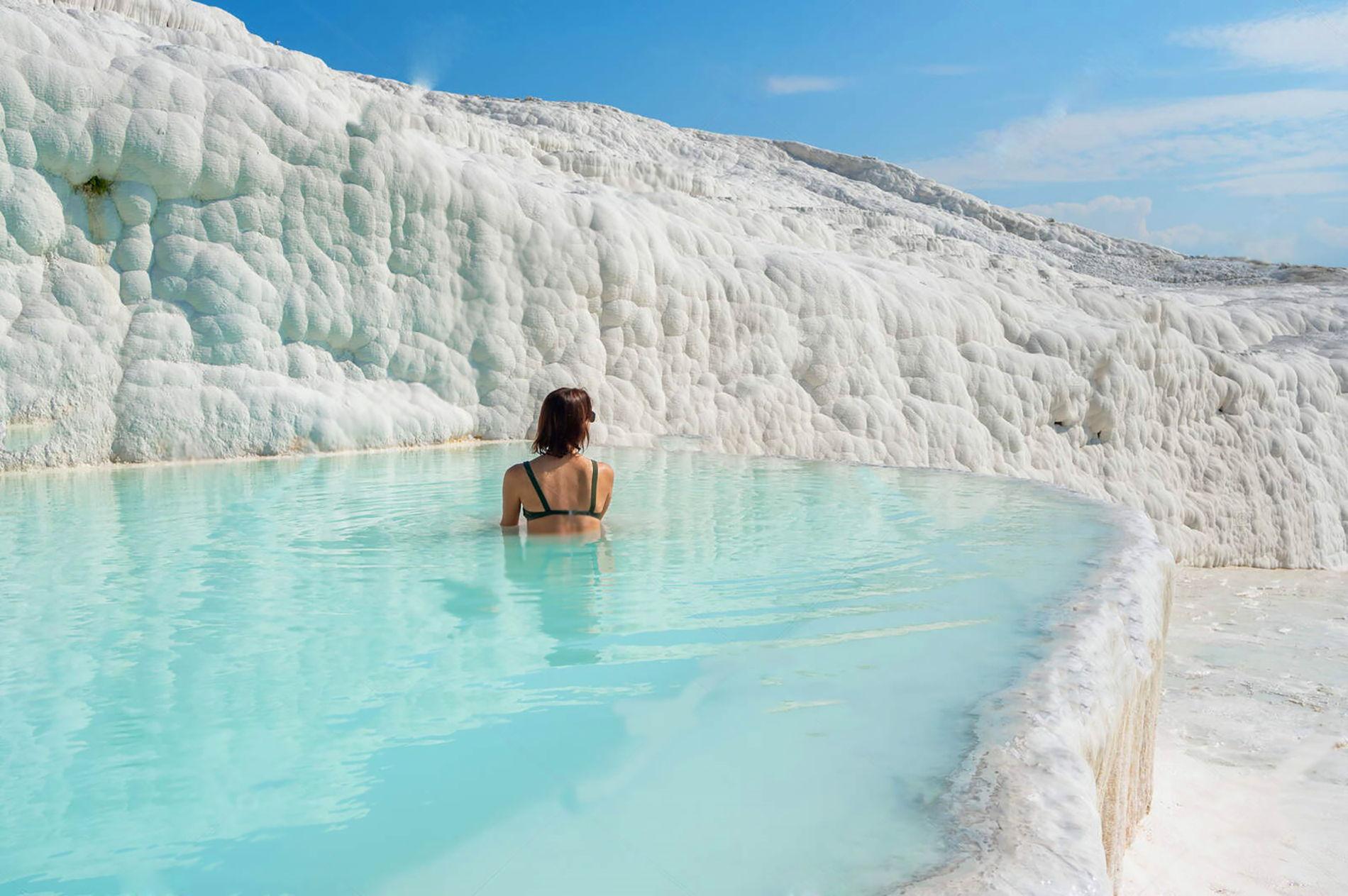
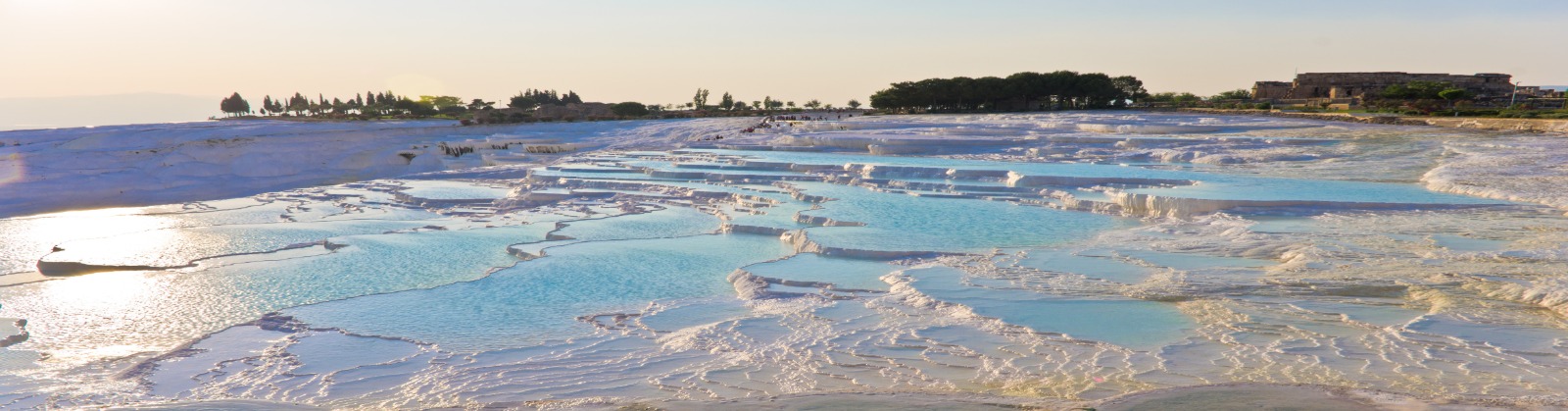
The signature white mineral pools formed by geothermal springs.
Built over a geological fault line in the city center.
They offer distinct experiences; most visitors who do both find the geological wonders of Pamukkale more visually unique, while Ephesus provides a deeper encounter with classical urban history.
| Feature | Top pick Pamukkale | Ephesus |
|---|---|---|
Primary attraction |
Travertine terraces and Hierapolis | Roman city ruins |
Primary landscape |
White mineral deposits | Classical marble streets |
Walking intensity |
Moderate to high | High |
Best time for photographs |
08:00–10:00 | Early morning or late afternoon |
Historical focus |
Greco-Roman thermal center | Imperial Roman urban life |
Physical experience |
Wading in thermal water | Extensive outdoor walking |
| See tickets → |
Verdict: If your priority is a unique natural phenomenon, choose the bodrum to pamukkale day trip tours, but select Ephesus if you prefer immersive archeological exploration through bodrum to pamukkale day trip tickets and related local history sites, noting that booking a bodrum to pamukkale day trip tour simplifies the logistics for these distant landmarks.
Choose your ticket, select your date, and reserve in under two minutes. Secure checkout handled by our verified partner.
Instant confirmation by email, with a mobile voucher you can save offline. No printing, no queuing at a collection desk.
Arrive at the entrance, show your voucher on your phone, and walk in. Most tickets include priority or skip-the-line access.
Practical details for your visit straight from our verified partners — hours, access, rules, and how to get there.
Hierapolis Örenyeri, 20280 Pamukkale
Primary meeting point for most tours
Regular intercity coaches run from Bodrum to Denizli followed by a local dolmuş.
Modest clothing is recommended when exploring the Hierapolis ruins. You must remove shoes before entering the travertines to protect the natural mineral formations.
Security checks occur at all entry gates. Keep personal belongings in a light day pack, as no storage lockers are available inside the park.
Photography is permitted throughout the Hierapolis and travertine areas. Please respect the privacy of other visitors when capturing the landscape.
The site is largely rugged and hilly, presenting challenges for those with mobility issues. Main paths in the ancient city are uneven stone.
The area is suitable for children, but carry adequate water and snacks. Strollers are difficult to navigate on the travertine paths.
Cafes are located near the main entrance and Cleopatra's Pool. Bringing a reusable water bottle is highly recommended for a bodrum to pamukkale day trip.
Best time to go, insider tips, nearby landmarks, and the cancellation fine print — flip through to skim what matters to you.
How crowds, weather, and events shift across the year.
Mild temperatures make the Hierapolis ruins exploration comfortable.
High heat requires an early start for a bodrum to pamukkale day trip.
Cooler air and fewer crowds are ideal for visiting Pamukkale.
Atmospheric and quiet, though some facilities may close early.
Small details that turn a good visit into a great one.
Drink plenty of water throughout your bodrum to pamukkale day trip.
Non-bookable sights within a short walk — free to visit, easy to pair.
Significant ancient city with extensive excavations.
Flexible, no hidden fees.
Tickets are strictly non-refundable and valid for one-time entry only. Cancellations of tour packages depend on your specific operator's terms.
Hand-picked options within walking distance — pick a district for vibe, or a specific hotel for convenience.
Central for accessing all three park gates.
The calcium-rich thermal springs that built Pamukkale's travertine terraces have flowed for 14,000 years, depositing white carbonate minerals at a rate of 2.5 centimeters per century. The result is a geological formation that resembles frozen waterfalls cascading down a hillside, visible from the Denizli plain 200 meters below. Above these terraces lies Hierapolis, a Greco-Roman spa city founded in 190 BCE by Eumenes II of Pergamon, who recognized the therapeutic value of water that maintains a constant 36°C year-round. Hierapolis grew into one of Anatolia's largest cities, with a population exceeding 100,000 at its second-century peak. The necropolis stretching north from the ancient walls contains 1,200 tombs, the largest burial ground in Asia Minor. Roman engineers channeled the hot springs through an elaborate hydraulic system, feeding public baths, the Sacred Pool where marble columns from a Byzantine-era earthquake still rest underwater, and private thermae that charged admission fees recorded on stone inscriptions. The theatre, completed under Septimius Severus in 206 CE, seated 15,000 spectators and retains its stage building with intact friezes depicting Dionysus, Apollo, and Artemis. The site earned UNESCO designation in 1988 for its dual geological and archaeological significance. Modern conservation efforts restrict foot traffic on the travertines to barefoot visitors only, a policy enforced since 1997 after decades of hotel construction and unregulated tourism threatened the formations. The 30 EUR entrance fee funds ongoing restoration work, including the stabilization of the Martyrium of St Philip, an octagonal fifth-century structure built on the site where early Christian tradition places Philip the Apostle's martyrdom in 80 CE. Organized excursions from Bodrum cover the 240-kilometer route in approximately three hours each way, departing coastal resorts before dawn to reach the terraces during morning light. The distance requires commitment, but the combination of natural phenomenon and layered history delivers what isolated beach resorts cannot: a geographic narrative spanning millennia, written in calcium and stone.
"The calcium-rich thermal springs have flowed for 14,000 years, depositing white carbonate minerals at a rate of 2.5 centimeters per century."
A step-by-step walkthrough of the visit — what you'll see, how long each stage takes, and the details that matter.
You depart Bodrum between 05:30 and 06:00, when the coast is still dark. The air-conditioned coach climbs inland through pine forests and agricultural valleys, reaching Denizli province as morning breaks. By 09:00 you arrive at the southern entrance, where you remove your shoes before stepping onto the travertines. The calcium deposits feel smooth and warm underfoot, fed by thermal springs that pool in shallow basins. You walk the terraces for 30 minutes, pausing at designated pools for photographs against the white cliffs. At the summit, you enter Hierapolis through the South Gate. Your guide leads you past the necropolis, where sarcophagi line both sides of the ancient road, then into the city center. You walk the colonnaded main street to the theatre, climbing to the upper tiers for views across the Lycus Valley. The Apollo Temple foundations and the Plutonium, a cave that emitted toxic volcanic gas in antiquity, lie 200 meters west. Lunch is served at a local restaurant near the site, typically a buffet including grilled meats and regional mezze. After the meal you have 45 minutes at the Sacred Pool, where you can swim among submerged marble columns for an additional fee. By 15:30 the group reconvenes for the return journey, reaching Bodrum between 18:30 and 19:00.
The site is open 08:00–21:00 daily.
Yes, the conservation fee is 30 EUR per person, covering both Pamukkale and Hierapolis.
Arrive between 08:00–10:00 to avoid the peak heat and large tour buses.
Yes, but keep them lightweight as you must carry them with you.
Discounts are generally not applicable to the base 30 EUR fee; please check official government sites.
Yes, every bodrum to pamukkale day trip ticket includes access to the ancient city of Hierapolis.
Wear comfortable, breathable clothing and footwear that is easy to remove for the travertine pools.
Yes, children are welcome on a bodrum to pamukkale day trip with adult supervision.
No, there are no secure storage lockers available at the gates for your belongings.
The best way to beat the crowds is to arrive at the 08:00 opening time.